What First-Time Homebuyers Need to Know About Home Loans in 2026
25 April 2026
So, you’re finally ready to buy your first home. Congratulations! That feeling of unlocking your own front door, painting the walls any color you want (hello, bold accent wall!), and having a place that’s truly yours—it’s electric. But let’s be real for a second: the mortgage process can feel like trying to decipher a foreign language while walking a tightrope. And in 2026? The game has shifted. Interest rates are doing a slow dance, lenders are getting creative, and the market is full of both opportunities and obstacles. Don’t worry, though—I’ve got your back. Think of me as your friendly guide who’s already stumbled through the mud so you don’t have to. Let’s break down everything you need to know about home loans in 2026, no jargon, no fluff, just straight talk.

The 2026 Mortgage Landscape: What’s Different This Time?
First things first: 2026 isn’t your parents’ housing market. Remember when you could get a 3% mortgage rate and a cookie at the bank? Yeah, those days are in the rearview mirror. In 2026, rates have settled into a “new normal”—hovering somewhere between 6% and 7% for a 30-year fixed loan. That might sound scary, but here’s the thing: it’s actually not as bad as it seems. Rates are more stable than they were in 2023 or 2024, when they were bouncing around like a pinball. Stability is your friend. It means you can plan, you can budget, and you won’t wake up one morning to find your rate has doubled.But here’s the kicker: lenders are also throwing more options at first-time buyers. In 2026, we’re seeing a rise in “portfolio loans” (loans that banks keep on their own books instead of selling to Fannie Mae) and more flexible down payment assistance programs. Why? Because banks know that first-timers are the lifeblood of the market. They want you in that house—they just need to make sure you can afford it. So, while the rates aren’t rock-bottom, the opportunities to get creative with your financing are better than ever.

Your Credit Score: The Golden Ticket (And How to Polish It)
Let’s talk about the elephant in the room: your credit score. In 2026, lenders are still obsessed with it. Think of your credit score as your financial fingerprint—it tells lenders how responsible you are with money. And while you don’t need a perfect 850 to get a loan (nobody does), you do need to be in the “good” zone, which is usually 680 or above for most conventional loans. But here’s a secret: many first-time homebuyer programs in 2026 accept scores as low as 620, especially if you’re using an FHA loan.So, how do you polish that score? Start six months before you even look at houses. Pay down your credit card balances—don’t just pay the minimum, pay them off if you can. Don’t open new credit cards (that’s a red flag). And for the love of all things holy, don’t miss a payment. Set up autopay if you have to. Your score is like a garden: it needs regular watering and weeding. Neglect it, and you’ll have weeds (read: higher rates) everywhere.

Down Payments: The Myth of the 20% Monster
I’m going to say something that might shock you: you don’t need 20% down. I repeat, you do not need 20% down. That’s an old myth that’s been haunting first-time buyers for decades. In 2026, the average down payment for first-time buyers is closer to 6% to 10%. Some programs let you put down as little as 3% (like the Fannie Mae HomeReady or Freddie Mac HomeOne loans). And if you’re a veteran or active-duty military, VA loans can get you in with zero down. Zero. As in, you don’t put a single penny down.But wait—there’s a catch. If you put down less than 20%, you’ll likely have to pay private mortgage insurance (PMI). PMI is an extra monthly fee that protects the lender if you default. It’s not the end of the world, though. In 2026, PMI rates are actually lower than they’ve been in years, thanks to competition among insurers. Plus, you can usually drop PMI once you’ve built up 20% equity in your home. So, think of it as a temporary tax on your dream. Annoying? Yes. A dealbreaker? Absolutely not.

The Alphabet Soup of Loan Types: FHA, VA, USDA, Conventional—Oh My!
If you’re feeling overwhelmed by all the acronyms, take a deep breath. I’ll break them down like I’m explaining them to a friend over coffee.- Conventional Loans: These are the standard, no-frills loans. They’re not backed by the government, so they usually require a higher credit score (680+) and a decent down payment. But they offer flexibility—you can buy a condo, a single-family home, or even a multi-unit property. In 2026, conventional loans are popular because rates are competitive and you can avoid some of the fees that come with government-backed loans.
- FHA Loans: Backed by the Federal Housing Administration, these are the go-to for first-timers with lower credit scores or smaller down payments. You can get in with a 580 credit score and 3.5% down. The downside? You’ll pay an upfront mortgage insurance premium (MIP) and monthly MIP for the life of the loan (unless you refinance). But for many, it’s worth it.
- VA Loans: If you’ve served in the military, this is your golden ticket. No down payment, no PMI, and competitive interest rates. The only catch is a funding fee, which can be rolled into the loan. In 2026, VA loans are even more attractive because lenders are offering streamlined processing for veterans.
- USDA Loans: These are for rural and suburban homebuyers. Yes, you read that right—you don’t have to live on a farm. If you’re buying in a designated “rural” area (which includes many suburbs), you can get a USDA loan with zero down and low interest rates. The catch? You have to meet income limits, and the property must be in an eligible area. But if you qualify, it’s a steal.
The Pre-Approval Power Move: Why You Shouldn’t Skip This Step
Imagine walking into a car dealership, pointing at a shiny red convertible, and saying, “I want this one.” The salesperson asks, “How much cash do you have?” You shrug. That’s the vibe you give sellers when you don’t have a pre-approval letter. In 2026, in most markets, homes are still selling quickly, especially in desirable neighborhoods. A pre-approval letter is your badge of honor. It tells the seller, “I’m serious, I’ve been vetted, and I have the money.”Getting pre-approved is simple: you fill out an application, the lender pulls your credit, and they tell you how much you can borrow. Do this before you start house hunting. Why? Because you don’t want to fall in love with a $400,000 home only to find out you’re approved for $350,000. That’s heartbreak you can avoid. Plus, pre-approval locks in your rate for a certain period (usually 60 to 90 days), protecting you from rate hikes while you shop.
Interest Rates in 2026: The Slow Dance
Let’s talk about the big, scary number: the interest rate. In 2026, rates are like a slow dance—they’re not jumping around wildly, but they’re also not standing still. Most economists predict rates will hover between 5.5% and 7% for the year, depending on inflation and the Fed’s moves. But here’s the thing: you can’t time the market. Waiting for rates to drop is like waiting for a bus that may never come. If you find a house you love and can afford the payment, buy it now. You can always refinance later if rates go down.But what about adjustable-rate mortgages (ARMs)? In 2026, ARMs are making a comeback. A 5/1 ARM (fixed for the first 5 years, then adjusts annually) might offer a lower initial rate than a 30-year fixed. It’s a gamble, but it can be smart if you plan to move or refinance within a few years. Just know that after the fixed period, your rate could go up—or down. It’s like a financial rollercoaster, but with a seatbelt.
Closing Costs: The Sneaky Expenses Nobody Warns You About
You’ve saved up for the down payment, you’ve got your pre-approval, and you’re ready to sign. Then the lender hits you with “closing costs.” These are fees for everything from the appraisal to the title search to the notary public. In 2026, closing costs average 2% to 5% of the home’s purchase price. On a $300,000 home, that’s $6,000 to $15,000. Ouch.But don’t panic. You can negotiate. Some lenders offer “no-closing-cost” loans, where they roll the fees into the interest rate. It means a slightly higher monthly payment, but less cash upfront. You can also ask the seller to cover some closing costs—especially in a buyer’s market. In 2026, with homes sitting on the market a bit longer in some areas, sellers are more open to concessions. So, don’t be shy. Ask for what you need.
The Hidden Costs of Homeownership: Budget Beyond the Mortgage
Here’s a truth bomb: your monthly mortgage payment is just the beginning. Once you own a home, you’re responsible for everything—the leaky faucet, the broken furnace, the tree that falls on the roof during a storm. In 2026, home maintenance costs have risen thanks to inflation. The rule of thumb is to set aside 1% of your home’s value each year for repairs. On a $300,000 home, that’s $3,000 a year, or $250 a month.Also, don’t forget property taxes and homeowners insurance. In some states, property taxes can add hundreds to your monthly payment. And if you’re buying in a flood zone or wildfire-prone area, insurance premiums can be sky-high. Do your homework. Talk to your lender about escrow accounts (where they collect taxes and insurance monthly so you don’t get a surprise bill). It’s like having a savings account you can’t touch—annoying but smart.
Government Programs: Free Money (Sort Of)
In 2026, there are more down payment assistance programs than ever before. These are grants or low-interest loans from state and local governments, designed to help first-time buyers. Some are forgivable after a few years—meaning you don’t have to pay them back if you stay in the home. Others are deferred, so you repay them when you sell or refinance.For example, the FHA’s 203(k) loan lets you roll renovation costs into your mortgage. So, if you buy a fixer-upper, you can finance both the purchase and the repairs with one loan. It’s like buying a diamond in the rough and polishing it yourself. In 2026, with housing inventory still tight in many areas, fixer-uppers are a goldmine for first-time buyers.
The Emotional Rollercoaster: How to Stay Sane
Buying your first home is a emotional marathon. You’ll have highs (when you find the perfect kitchen) and lows (when you lose a bidding war). In 2026, the market is still competitive in many cities, so be prepared for rejection. It’s not personal. It’s just business.Here’s my advice: keep a sense of humor. When your real estate agent sends you a listing that looks like a haunted house, laugh about it. When your lender asks for the same document for the third time, take a deep breath and send it again. And when you finally get the keys, celebrate. Pop a bottle of something bubbly. Dance in the empty living room. You earned it.
Final Thoughts: Your Home Loan Journey Starts Now
So, what’s the takeaway from all this? In 2026, home loans are more accessible than you think. Yes, rates are higher than the historic lows of 2020, but they’re stable. Yes, down payments are still a hurdle, but there are programs to help. Yes, the process is confusing, but you don’t have to navigate it alone. Get a good real estate agent, a trustworthy lender, and maybe a therapist (just kidding… kind of).Remember, buying a home isn’t just a financial transaction. It’s a milestone. It’s where you’ll make memories, host Thanksgiving dinners, and watch your garden grow (or die, depending on your plant skills). The loan is just the vehicle that gets you there. So, strap in, do your research, and take the leap. Your future self—sitting on that porch with a cup of coffee—will thank you.
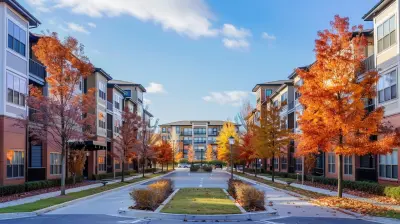
all images in this post were generated using AI tools
Category:
Home LoansAuthor:

Camila King
Discussion
rate this article
2 comments
Dominique McGivern
Oh great, home loans in 2026. Just what first-time buyers need-more jargon to decipher. Don't worry, it's all fun and games until you see the interest rates...
May 10, 2026 at 4:00 AM
Camila King
I get it, navigating home loans can feel overwhelming. But understanding the options now can really help buyers in the long run... Let's simplify it together.
Niva Sanchez
Understanding home loans is crucial for first-time buyers. Equip yourself with knowledge and confidence to secure the best deal in 2026!
April 26, 2026 at 3:36 AM
Camila King
Absolutely. Knowledge truly is power when entering the market. Here’s hoping 2026 brings clarity and great rates for all first-time buyers.